
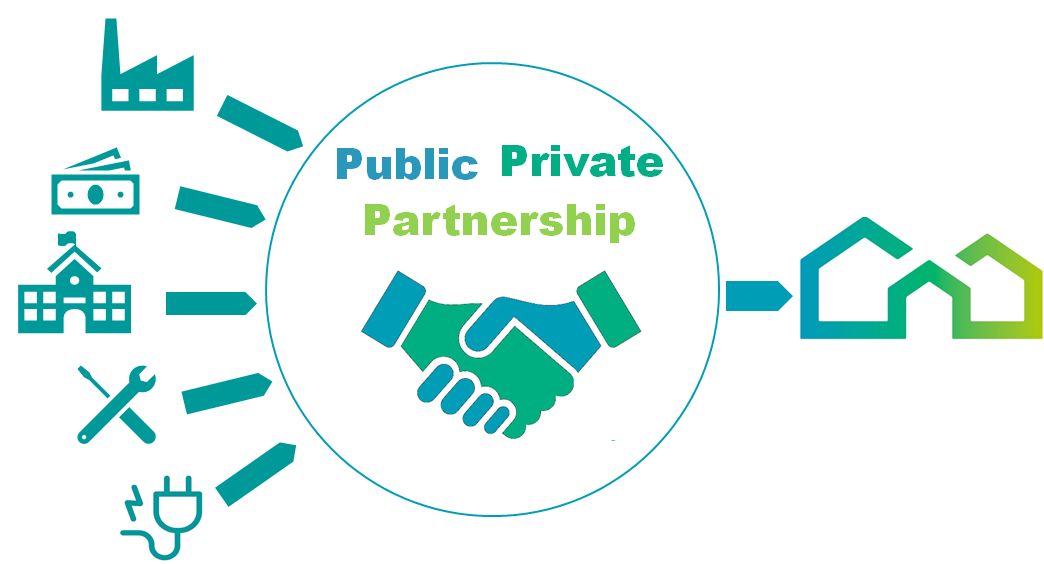
The foundation of a country’s economic development and progress lies in its infrastructure. Over the past few decades, many developed nations have successfully utilized Public-Private Partnerships (PPPs) to fund, plan, and complete large-scale infrastructure projects. This model effectively addresses infrastructure deficiencies by pooling resources from both the public and private sectors. However, despite its potential benefits, Nepal has not widely adopted PPPs, particularly in the infrastructure sector.
In today’s world, public-private partnerships (PPPs) have become a crucial model for infrastructure development. PPPs have a proven track record of boosting economic growth, increasing efficiency, and mobilizing resources, especially in industrialized countries. Despite their success, developing nations like Nepal, which still face significant infrastructure gaps, have not formally embraced this model. This article explores the concept and history of PPPs, their successful application in developed countries, and the reasons why Nepal has not fully adopted this model.
Understanding PPPs
The term “public-private partnerships” (PPPs) refers to collaborative arrangements between public and private sector organizations to fund, construct, operate, and manage infrastructure projects. The public sector provides long-term objectives, regulatory oversight, and public benefits, while the private sector contributes capital, efficiency, and technical expertise. These collaborations aim to leverage the strengths of both sectors.
At its core, a public-private partnership is an agreement between a private sector organization and a public sector organization (such as the government) to deliver services or infrastructure that are typically provided by the public sector. The fundamental principle of PPPs is that both sectors share the risks, responsibilities, and benefits of completing infrastructure projects or providing public services. Under this model, the public sector ensures that the project aligns with national development goals and regulations, while the private sector typically provides capital, knowledge, and operational efficiency.
Large-scale infrastructure projects, such as roads, bridges, airports, hospitals, schools, and hydropower plants, often utilize PPPs. While the government may provide funding, guarantees, or acquire services from the private partner, the private sector is usually responsible for design, construction, operation, and sometimes financing. The lifespan of a PPP project typically ranges from 10 to 30 years, during which payments are made to the private partner based on service delivery or performance. Common PPP models include BOOT (Build, Own, Operate, and Transfer), BOO (Build, Own, and Operate), DBFO (Design, Build, Finance, and Operate), DBFOM (Design, Build, Finance, Operate, and Manage), BTO (Build, Transfer, and Operate), DCFM (Design, Construct, Finance, and Manage), PFI (Private Finance Initiative), and O&M (Operate and Maintain).
Potential Benefits of PPPs for Nepal
Nepal’s infrastructure development has lagged behind its regional counterparts due to financial constraints and inefficient public sector management. However, PPPs offer a viable solution to bridge this gap. To successfully implement Public-Private Partnerships (PPPs) in Nepal’s infrastructure sector, several key steps are necessary. First, Nepal must establish a clear legal and regulatory framework to govern PPP contracts, ensuring standardized dispute resolution, risk-sharing, and bidding processes. Strengthening public institutions like the Department of Roads and the Ministry of Finance is also crucial for effectively managing PPP projects. Additionally, the government should encourage private investment by offering incentives such as tax reductions, guarantees, and financial support systems. Finally, increasing public awareness through campaigns that highlight the benefits of PPPs in economic growth and infrastructure development will help gain broader support for this model.
Challenges and Future Prospects
Despite its infrastructure development needs, Nepal has yet to fully adopt the PPP model. Factors such as political instability, regulatory hurdles, limited institutional capacity, and a lack of experience in public-private cooperation hinder its implementation. However, with strategic reforms, Nepal can leverage PPPs to accelerate infrastructure development, attract international investment, and enhance economic growth. PPPs have been effective in infrastructure development worldwide, helping governments overcome financial constraints, improve efficiency, and reduce corruption. Countries like the UK, Australia, Canada, and India have successfully implemented PPPs, and Nepal can benefit by adopting this model. By establishing a strong legal framework and fostering public-private collaboration, Nepal can address its infrastructure gaps, drive economic growth, and improve quality of life.




Leave a Reply